Blog
Insights & Updates
Thoughts on metadata engineering, data mapping, and building audit‑ready data infrastructure.

The Technical Debt Magellan Retires
Not all technical debt lives in application code. Here is the inventory of data-transformation debt Magellan eliminates outright — and how each one is retired by design.
Read more →
Does Magellan Answer Every Data Governance Question?
An honest map of what Magellan fully answers, what it answers thinly, and what it leaves to the rest of the governance stack — because coverage claims that ignore gaps do not survive a procurement review.
Read more →
How Magellan Provides Data Lineage and Provenance
Trace source-to-target field relationships, preserve versioned mapping decisions, and verify their history with Magellan’s lineage and provenance architecture.
Read more →
Transformation Debt, and the Record That Pays It Off
Transformation logic that lives only in scripts and memories compounds quietly. Here is how Magellan turns it into versioned, governed, reproducible decisions — and makes the whole history tamper-evident.
Read more →
How Magellan Uses Ontologies
Ontologies give Magellan a governed concept layer above source and target schemas — so mappings resolve to shared meaning, not just matching strings. Here is how that layer works, end to end.
Read more →
AI Agents Need a Metadata Layer — Why Autonomous Systems Can't Operate Without Governed Data Context
AI agents are only as reliable as the data they access. Without a metadata layer that provides schema context, lineage, and semantic meaning, agents hallucinate, break pipelines, and make dangerous assumptions.
Read more →
Data Catalogs vs. Knowledge Graphs — Why Passive Inventory Isn't Enough
Traditional data catalogs inventory your assets but can't reason about them. Knowledge graphs capture relationships, context, and lineage — turning metadata from a filing system into an intelligence layer.
Read more →
Data Quality Engineering — Shifting Left to Catch Bad Data Before It Breaks Everything
Stop treating data quality as an afterthought. Learn how to embed validation, profiling, and anomaly detection directly into your pipelines — and why metadata-driven governance is the key.
Read more →
CMMC L2 §3.3 AU-Family Controls, Satisfied by Construction — One Hash Chain, Three Regimes
How Magellan's Audit & Trust Ledger produces the evidence a CMMC L2 §3.3 C3PAO assessor needs — using the same SHA-256 hash chain that satisfies HIPAA §164.312(b) and 21 CFR Part 11 §11.10(e).
Read more →
The Legacy-to-FHIR Migration Playbook — Practical Patterns for Healthcare Data Modernization
Migrating from HL7 v2, X12 EDI, and proprietary formats to FHIR R4 is the defining challenge of healthcare IT. Here's a practical, phase-by-phase playbook for getting it right.
Read more →FedRAMP & Public Sector Data Governance — What Federal Mandates Mean for Metadata Platforms
Federal agencies are modernizing data infrastructure under strict compliance frameworks. Here's how FedRAMP, FISMA, and public sector data mandates reshape the requirements for metadata management.
Read more →
Data Mesh Needs Governed Mappings — The Missing Coordination Layer
Data mesh promises domain ownership and decentralized data. But without governed mappings between domains, decentralization becomes fragmentation. Here's the coordination layer most implementations are missing.
Read more →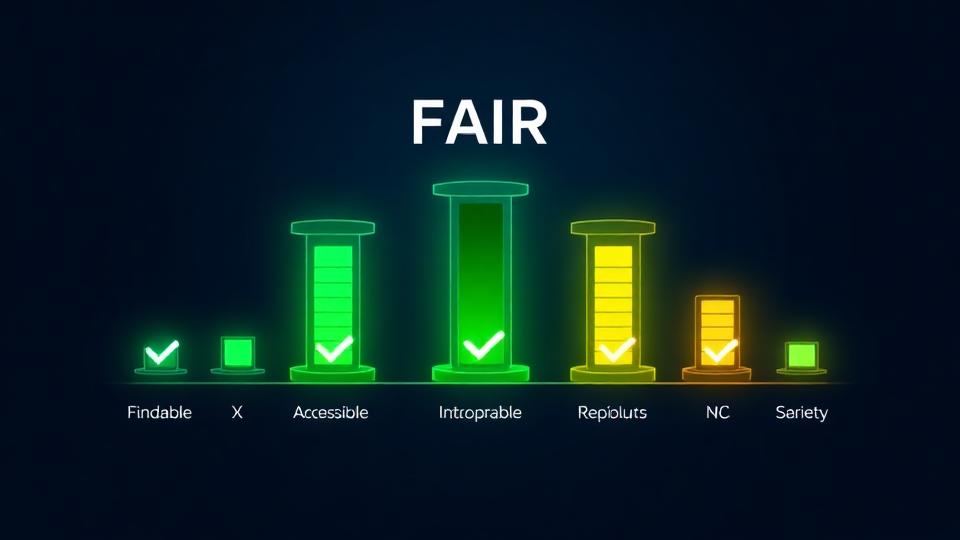
FAIR Data Compliance Scoring — Measuring What Makes Data Truly Reusable
The FAIR principles (Findable, Accessible, Interoperable, Reusable) are the gold standard for data quality — but most organizations can't measure compliance. Here's how automated metadata analysis changes that.
Read more →
Inside the Semantic Match Engine
A technical walkthrough of how Magellan turns two schema field paths into a ranked, calibrated proposal — embedding, calibrated cosine ranking, and confidence calibration, end to end.
Read more →
The ROI of Governed Metadata — Quantifying the Business Case for Metadata as Code™
Metadata governance isn't just good engineering — it's a measurable business advantage. Here's how to quantify the time savings, error reduction, and compliance cost avoidance.
Read more →
Data Observability at the Mapping Layer — Catching Quality Issues Before They Cascade
Most data observability tools monitor tables and dashboards. By the time they catch a problem, the damage is done. Here's why observability belongs at the mapping layer — where data is actually transformed.
Read more →
Predictive Mapping — Why We Don't Say "AI‑Powered"
Predictive mapping is a deterministic pipeline of proposal, named-SME approval, and signed commit. Here is how Magellan's Semantic Match Engine differs from autonomous AI mapping — and why regulators accept it.
Read more →
Why Three Roles Aren't Enough: RBAC for Regulated Audit Ledgers
The standard SaaS reader / contributor / administrator model violates separation of duties for regulated audit ledgers. Magellan uses a seven-role model that maps cleanly to HIPAA §164.308(a)(2) & §164.312(b), 21 CFR Part 11 §11.10/§11.200, SOX §404 SoD, EU GMP Annex 11, GDPR Art. 32, FedRAMP AC-5/AC-6, and ISO 27001 A.5.3 / A.5.18.
Read more →
Magellan's Audit Architecture, in One Page
A short tour of the four moving parts that make Magellan's audit ledger defensible across HIPAA, 21 CFR Part 11, SOX §404, EU GMP Annex 11, GDPR Art. 30, FedRAMP (NIST SP 800-53 AU family), and ISO 27001 A.12.4: ULID-keyed entries, SHA-256 hash chain, role-at-time-of-action, and two-component electronic signatures.
Read more →
What an Auditor Actually Sees in Magellan — Across HIPAA, SOX, GxP, GDPR, FedRAMP, and ISO 27001
A short walkthrough of the questions an external assessor asks, the queries Magellan runs, and the evidence pack exported — from the assessor's seat. The same five questions come up in HIPAA OCR audits, SOX walkthroughs, FDA Part 11 inspections, GDPR supervisory-authority requests, FedRAMP 3PAO assessments, and ISO 27001 surveillance audits.
Read more →
Audit Evidence Export and Periodic Attestation in Magellan
How Magellan's Compliance Officer exports a verifiable evidence pack and applies the periodic attestation electronic signature that satisfies 21 CFR Part 11 §11.10(e)/§11.10(j), SOX §404 management assertion, EU GMP Annex 11 §9, GDPR Art. 30, FedRAMP AU-6, and ISO 27001 A.5.35.
Read more →Why the Magellan Audit Ledger Lives in the Same Container as magellan-data
Why we co-located the audit ledger writer inside magellan-data instead of building a separate audit microservice — the four structural splits that make it defensible under HIPAA, SOX, GxP, GDPR, FedRAMP, and ISO 27001, and the three conditions that would justify a split later.
Read more →
Data Governance Isn't Optional — How Metadata Management Keeps You Audit‑Ready
HIPAA, GDPR, CCPA, SOX — regulations demand demonstrable data lineage and provenance. Here's how metadata governance turns compliance from a fire drill into a byproduct of good engineering.
Read more →
Data Contracts & Schema Evolution — Taming Change Across the Data Pipeline
Schemas change. Pipelines break. Data contracts are the missing agreement layer between producers and consumers — here's how to implement them without slowing your team down.
Read more →
Why Magellan Uses ULIDs Instead of UUIDs for the Audit Ledger
ULIDs give Magellan's audit ledger something UUIDs cannot: a chronologically self-ordering, lexicographically sortable, distributed-safe primary key that maps cleanly to HIPAA §164.312(b) and 21 CFR Part 11 §11.10(e) audit-trail requirements.
Read more →
Hash-Chain Integrity for the Magellan Audit Ledger
A short technical walkthrough of how Magellan's SHA-256 hash chain detects tampering in the audit ledger and how a verifier reconstructs the chain to satisfy 21 CFR Part 11 §11.10(e).
Read more →
AI in Data Integration — Beyond the Hype, Into the Pipeline
AI is transforming data integration, but not in the way most vendors claim. Here's where AI actually delivers value — and where it still needs human oversight.
Read more →
FHIR & Healthcare Interoperability — Why Data Mapping Is the Missing Piece
Healthcare systems generate more data than ever, but interoperability remains elusive. Here's how metadata-driven mapping bridges the gap between FHIR mandates and real-world integration.
Read more →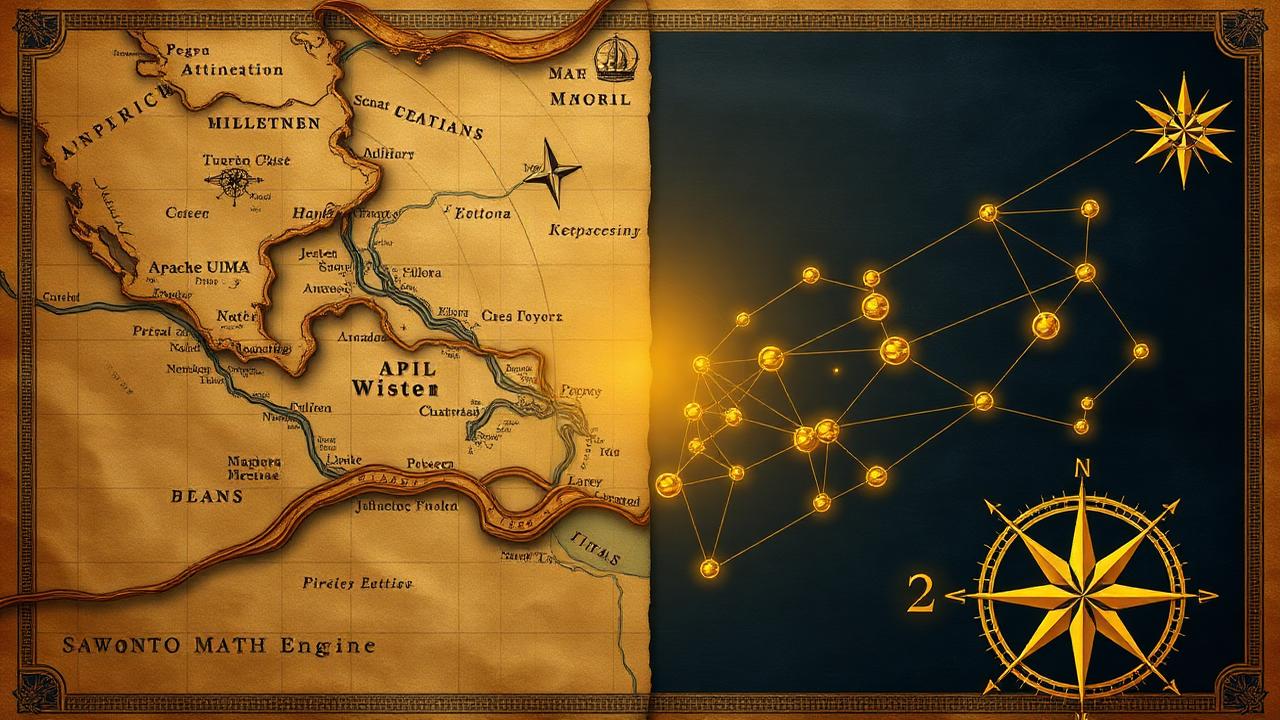
From UIMA and TEI to the Semantic Match Engine — 20 Years of NLP Heritage Behind Magellan
Magellan's Semantic Match Engine runs on Gemini 2.5 Flash, but the design choices behind it — typed annotations, decomposable confidence, structured metadata — trace back two decades to Apache UIMA, Stanford CoreNLP, and the Text Encoding Initiative.
Read more →
5 ETL Mapping Mistakes That Break Pipelines — And How to Fix Them
Data mapping is the most error-prone step in any ETL pipeline. Here are the five most common mistakes teams make — and the practices that prevent them.
Read more →
Beyond String Matching — How the Semantic Match API Understands Your Data
Traditional field matching relies on string similarity. The Semantic Match API goes further — using AI to understand context, domain knowledge, and hierarchical relationships between fields.
Read more →
Metadata as Code™ — Why Your Mappings Deserve the Same Rigor as Your Application Code
Data mappings are critical infrastructure, yet most organizations treat them as throwaway spreadsheets. Metadata as Code™ changes that by applying versioning, CI/CD, and lineage to every mapping.
Read more →
Knowledge Graphs for Data Lineage — Why Flat Mapping Tables Aren't Enough
How Magellan's persistent knowledge graph tracks data lineage across transformations, unlocking impact analysis, regulatory compliance, and institutional memory at scale.
Read more →
Introducing Magellan — A Metadata‑Driven Data Mapping Platform
Today we're launching Magellan, a platform that treats data mappings as first‑class assets with strong governance, automation, and a persistent knowledge graph.
Read more →