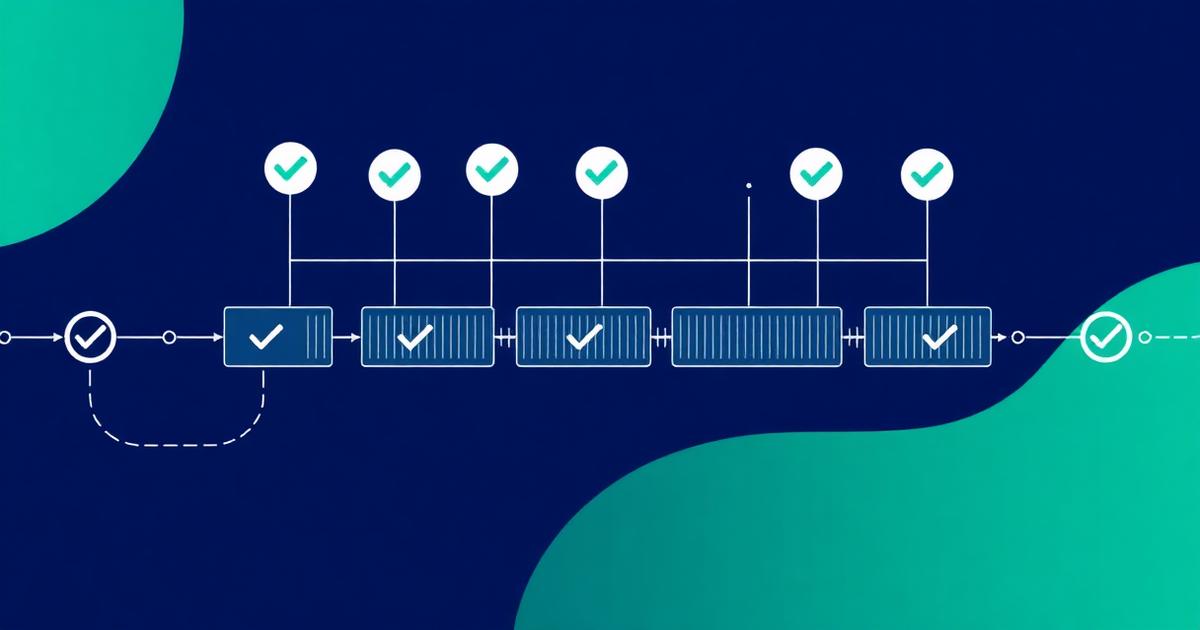
Data Quality Engineering — Shifting Left to Catch Bad Data Before It Breaks Everything
The $3.1 Trillion Problem You Keep Ignoring
IBM estimates that bad data costs the U.S. economy $3.1 trillion per year. Yet most organizations still treat data quality as a downstream concern — something to check *after* the pipeline runs, *after* the dashboard loads, *after* the executive asks why the numbers don't add up.
This is the equivalent of testing software only in production. We stopped doing that for application code a decade ago. It's time to stop doing it for data.
What Is "Shift Left" for Data Quality?
In software engineering, "shift left" means moving testing and validation earlier in the development lifecycle. Applied to data, it means:
- Validate at ingestion, not after transformation
- Profile schemas before mapping, not after deployment
- Detect anomalies in real time, not in last week's report
- Enforce contracts at the boundary, not in the warehouse
The goal is simple: catch bad data at the point of entry, before it contaminates everything downstream.
The Five Pillars of Data Quality Engineering
1. Schema Validation
Every data pipeline starts with a schema — explicit or implicit. The first line of defense is making that schema explicit and enforcing it rigorously.
What to validate:
- Field presence and nullability
- Data types and format constraints (dates, enums, ranges)
- Referential integrity across related entities
- Schema version compatibility
The Magellan approach: When you ingest a schema into Magellan's MetaModel, every field is typed, annotated, and versioned. When a source schema changes — a column is renamed, a type is altered, a required field becomes nullable — the platform detects the drift immediately and flags every downstream mapping that's affected.
2. Semantic Profiling
Schema validation catches structural problems. Semantic profiling catches *meaning* problems — the ones that are far more insidious.
Examples of semantic issues:
- A
statusfield that should containactive/inactivebut starts receivingA/I/P/Unknown - A
revenuefield that's suddenly 100x larger because someone changed the unit from dollars to cents - A
date_of_birthfield with values in the future - A
country_codefield mixing ISO 2-letter and 3-letter formats
Why it matters: These issues pass schema validation perfectly. The types are correct. The fields are present. But the *meaning* is wrong, and every downstream consumer inherits the error silently.
Semantic profiling builds statistical baselines for each field — value distributions, cardinality, range bounds, pattern frequencies — and alerts when incoming data deviates significantly from the norm.
3. Data Contracts
A data contract is a formal agreement between a data producer and its consumers about the shape, semantics, and quality guarantees of a dataset. Think of it as an API contract, but for data.
A well-defined data contract specifies:
- Schema — The exact fields, types, and structure
- Semantics — What each field means, including valid value ranges
- SLAs — Freshness guarantees, completeness thresholds, allowed error rates
- Ownership — Who produces the data and who to contact when it breaks
Without contracts, every schema change is a potential incident. The producer doesn't know who consumes their data, and consumers don't know when the rug gets pulled.
With contracts, changes are negotiated, versioned, and validated before they hit production — exactly the way Metadata as Code™ works.
4. Anomaly Detection
Even with schemas, profiles, and contracts, novel problems emerge. Anomaly detection provides the safety net:
- Volume anomalies — A table that usually receives 1M rows/day suddenly gets 10K or 100M
- Freshness anomalies — A dataset that updates every hour hasn't been refreshed in 6 hours
- Distribution shifts — The ratio of null values in a column jumps from 2% to 40%
- Referential anomalies — Foreign key violations that indicate upstream pipeline failures
The key is automating these checks so they run continuously, not relying on someone to manually inspect dashboards.
5. Lineage-Aware Impact Analysis
When bad data *does* get through — and it will — you need to answer two questions instantly:
1. Where did it come from? (backward lineage)
2. What did it affect? (forward impact)
Flat mapping tables make this an archaeological expedition. Magellan's knowledge graph makes it a single query. Every field traces back to its source through every transformation, and every downstream consumer is identified immediately.
This is the difference between a 15-minute incident and a 3-day fire drill.
The Cost of Reactive Quality
Organizations that treat data quality reactively pay in three ways:
1. Engineering Time
Data engineers spend an estimated 40-60% of their time on data quality issues — debugging pipelines, tracing bad values, reconciling conflicting sources. This is highly skilled, highly paid talent doing work that should be automated.
2. Decision Latency
When stakeholders don't trust the data, they don't make decisions. They ask for "one more validation," request manual spot-checks, or simply go with their gut. The entire point of data-driven decision-making collapses.
3. Compliance Risk
Regulatory frameworks like HIPAA, GDPR, and SOX don't just require data *security* — they require data *accuracy*. Reporting incorrect patient data, financial figures, or privacy classifications isn't just embarrassing. It's a violation.
Building a Data Quality Engineering Practice
Start with Your Most Critical Pipeline
Don't try to instrument everything at once. Pick the pipeline that causes the most pain — the one that breaks on weekends, triggers escalations, or feeds your most sensitive reports. Instrument that first.
Define Contracts Before Writing Code
Before building a new integration, define the contract. What does the consumer expect? What does the producer guarantee? Document it, version it, and validate against it automatically.
Make Quality Observable
Data quality metrics should be as visible as application uptime. Track:
- Freshness — Is the data current?
- Completeness — Are all expected records present?
- Accuracy — Do values fall within expected ranges?
- Consistency — Do related datasets agree?
Use Metadata as the Foundation
Every quality check, every contract, every anomaly detector depends on knowing what your data looks like. Metadata — schemas, mappings, lineage, ownership — is the foundation that makes all of this possible.
This is exactly why Magellan treats metadata as a first-class asset. You can't engineer quality into data you don't understand.
How Magellan Enables Data Quality Engineering
Magellan wasn't built as a "data quality tool" — but its architecture naturally supports quality engineering at every stage:
- Schema ingestion and normalization catches structural drift at the point of entry
- Semantic Match API ensures mappings are semantically correct, not just syntactically plausible
- Persistent knowledge graph provides instant forward and backward lineage for impact analysis
- Versioned mappings enable contract-like governance with full audit trails
- Rule functions codify transformation logic so quality checks are consistent and reusable
What's Next
Data quality engineering is a practice, not a product. But the right tooling makes the practice dramatically easier. If your team is spending more time fighting data fires than building data products, it's time to shift left.
Request a demo to see how Magellan's metadata-driven approach lays the foundation for data quality engineering, or read the white paper for the full platform architecture.
*Magellan AI Corporation — Charting every data connection.*